Cognitive and perceptual issues impact the lives of hundreds of millions of men, women, and children around the world. The everyday tasks we take for granted become insurmountable mountains to climb; and sights and sounds become part of an alien landscape, rather than offering the comfort of knowing, of home.
Globally, between 12%-16% of all children — 240 to 317 million people under age 18 — are impacted by the life-changing effects of neurodevelopmental disorders (NDD), includding: From Autism Spectrum Disorder, ADHD, intellectual disability, epilepsy, cerebral palsy, intellectual and communication disabilities.
While collectively grouped as an NDD, symptoms vary across conditions, and show a high degree of individual variability across demographics.
Maintaining cognitive health is important at any age.
Early detection of cognitive issues through screening is key for both children and adults, and operates across a wide range of ages, social determinants, co-morbidities, and risk factors.
SNAPSHOT: Alzheimer's Disease & Related Dementias
The Challenge/Pain Points
Undiagnosed. Globally, it is estimated that over 41M cases of dementia go undiagnosed. Between 20-50% of people over age 65 have undiagnosed Mild Cognitive Impairment across all morbidities.
Inadequate Tools. Current neuropsychological assessments have floor and ceiling limits, meaning that to screen and evaluate people relies on a patchwork of tests. The use of discontinuous clinical scales is particularly problematic for longitudinally detecting and tracking nuanced cognitive-motor changes for detecting and monitoring disease progressions.
Individual Variability. Individuals with cognitive impairments, whether associated with age and/or symptoms associated with other dementia risks present with a wide range of symptoms. This is true of many cognitive-motor issues with complex co-morbid presentations. The presentation of prodromal and pre-clinical stage disease markers makes early disease detection challenging.
Lack of Ecological Validity to real-world cognitive functions/ everyday life and interplay of multiple cognitive domains and influence, including: distractions, multitasking demands, and emotional pressures.
The Solution
PICSSi - Personalized Intelligent Cognitive Screening and Stimulation
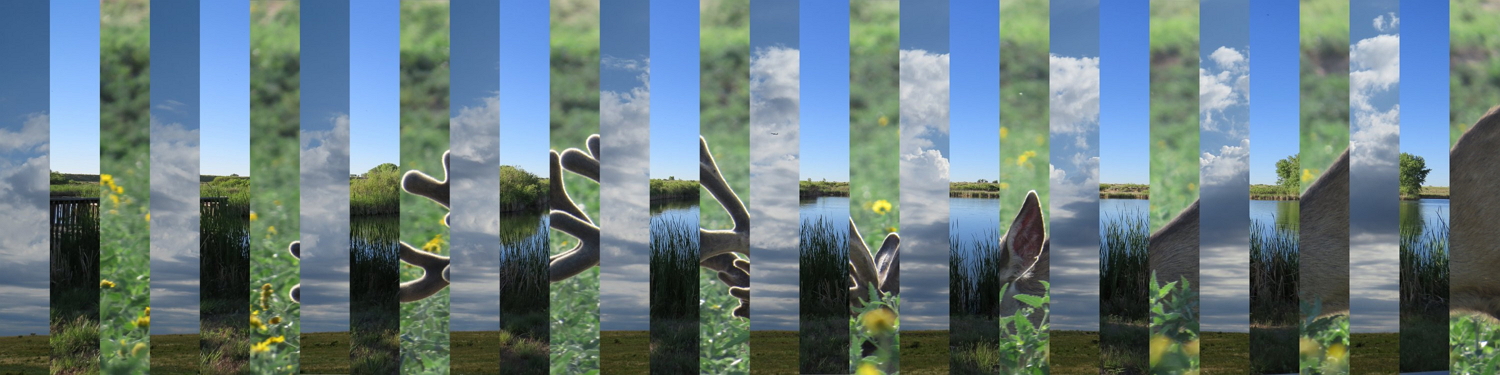
PICSSi is a multimodal platform designed to support cognitive health and well-being. PICSSi integrates the use of enriched visual stimuli; real-world images configured into dynamic 3D-like figure-ground visual illusions - natural puzzles for the mind.
Why PICSSi? Missing from the cognitive health equation are tools which can be personalized to each of us and still be sensitive enough to detect nuanced changes in cognitive health in people across a wide range of ages and conditions. Ideally, these tools should be able to detect changes in your cognitive health, but still be used on a population-level scale to support the development of predictive biomarkers.
For early detection of subtle changes, we're focused on changes in cognition and how everything works together, not just how the parts work or when they don't!
Shifting the Paradigm.
Our approach recognizes a fundamental truth - we are not all the same. Each of us is unique in how we think, how we problem solve, in our memories and life experiences. PICSSi leverages these differences in developing an integrated, personalized approach to establish individualized cognitive expression patterns by cooperatively engage cognition across all cognitive domains.
The Stimuli. PICSSi's multiplexed image constructs are dynamic examples of stable and multi-stable ambiguous images. All constructs convey the illusion of depth, while stable constructs show only one image in the ground (background) position.
Multistable constructs demonstrate a phenomenon known as percept switching, where the image which is perceived to occupy the ground position at any one point in time can switch/shift. This dynamic interaction occurs naturally, but may also be triggered, manipulated, and predicted. Differences in percept switching and depth perception is a potentially strong marker in people with attentional and visual perception issues.
Versatility. These enriched visual stimuli are designed to engage cognition and challenge the mind with naturalistic scenes and user-relevant content. The stimuli can be configured for device-based and/or offline use with options for view-only/hands-free and/or hands-on interactions.
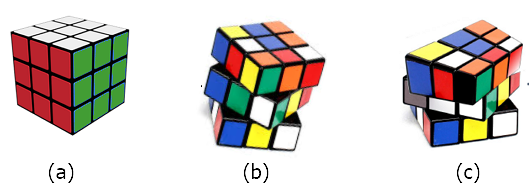
Current siloed domain assessment approaches can be represented by the Rubik's Cube on the left (a). While the PICSSi approach is best represented by the center Rubik's Cube (b) in considering overall cognition - the integrated whole that reflects how we think and problem solve, and how cognition changes over time and with disease (c). PICSSi stimuli are natural puzzles for the mind, holistically engaging cognition across all cognitive domains.
Purpose-Built for 21st-Century User Interactions
A simple prompt - "What do you see?" With the right stimulus, this simple question can integratively engage cognition across all cognitive domains, holistically transforming health and well-being for people across the cognitive spectrum. By default and design, the stimuli themselves embody Gestalt visual cues of completion, continuation, symmetry and figure-ground, further aligning screening and treatment with native cognitive processes associated with problem-solving, scene analysis and other executive functions.
Siloed Domain versus Multi-Domain. Current neuropsychological methods focus on assessing individual cognitive domain deficits and then deriving a composited score of overall cognition. At conflu3nce, we view cognition from a Gestalt perspective - an integrated whole (cognition) as something other than - more than - the sum of its parts (domain-specific tests and deficits). As such, PICSSi's enriched visual stimuli provide rich targets for object identification, memory, attention, language, visual-spatial, executive function, and sensorimotor engagement and interactions.
User-Specific Longitudinal Stimuli & Assessments. The integration of user-supplied images (memories and experiences) as personalized stimuli facilitates a personalized approach to longitudinally track changes in cognition. Image-based mental orientation tasks introduce long-term memory recall tasks to complement traditional mental orientation tasks. These view-only tasks can be complemented with hands-on interactives for tracking changes in depth perception and other cognitive skills and processes for collecting speed and accuracy metrics.
Personalization. The depth of PICSSi's enriched visual stimuli delivers cognitive-engaging power in each construct. Gamifying user-supplied image (memories and experiences) into enriched visual stimuli personalizes cognitive engagement with targeted memory stimulating, attention focusing interactions/tasks to cooperatively and integratively engage cognition.
Continuous Clinical Scale. PICSSi stimuli offer clinicians the ability to vary the complexity of the same essential stimulus by changing the sectioning strategy. The capacity to adaptively modulate the complexity to match user +/- skills facilitates longitudinal detection and tracking of changes in cognition.