Globally, one-third of the world's population is affected by skin disease
In the United States, 5M people are treated for skin cancer each year
The Challenge
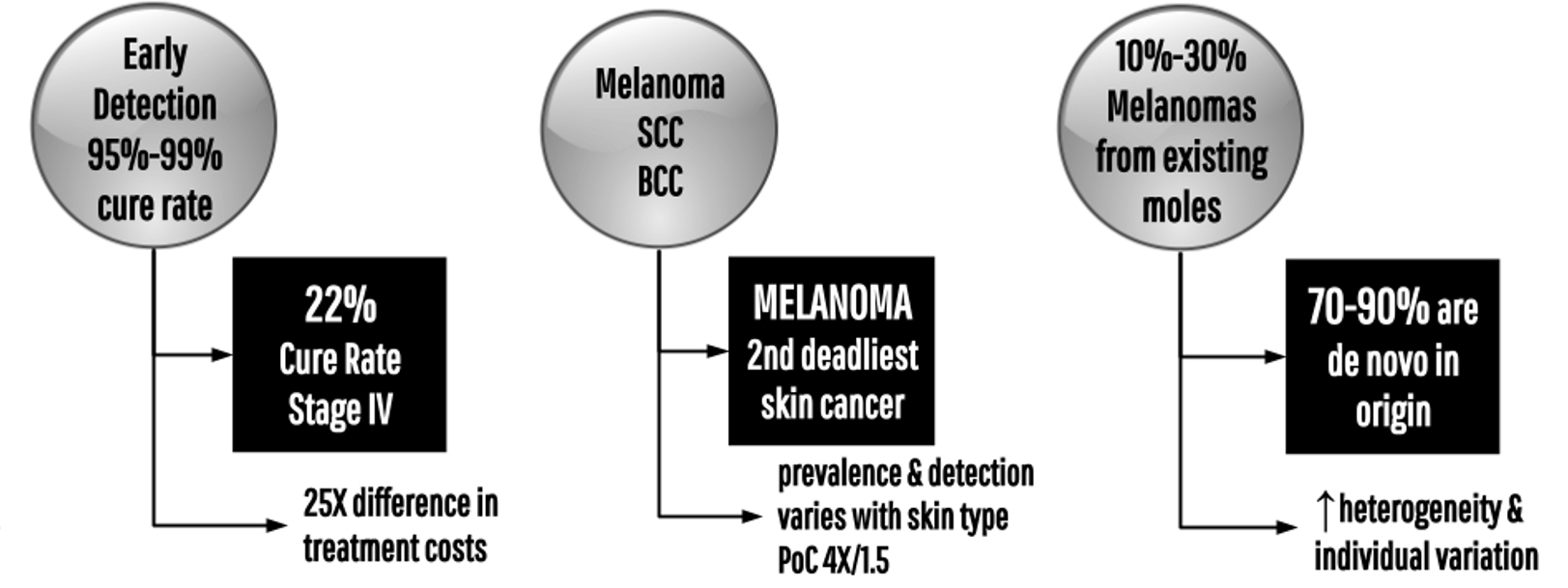
Clinicians are not specifically trained to recognize skin health issues in people of color. Skin issues present differently in people of color - a diagnostic and early detection problem that impacts 66% of the world's population with Skin Type III or above.
The Impact. A general lack of clinical dermatology skills, knowledge, data bias, and social determinants can contribute to medical errors (misdiagnoses & missed diagnoses) that negatively impact patient safety and health outcomes exacerbating existing healthcare disparties for people of color.
While melanoma occurs less often in people of color, they are 4x more likely to receive a late-stage diagnosis and 1.5x more likely to die than their caucasian counterparts.
Why Change is Needed?
Because We Are Not All The Same. For years, medicine and science has shied away from looking at differences to avoid racial bias. But when it comes to health issues for people of color, we can't afford to be "colorblind". Our solution begins by asking better - different - questions that extend stakeholder knowledge and understanding of skin diseases.
To roll back the early detection timeline we need to unlock hidden data... to see the unseen and know the unknown!
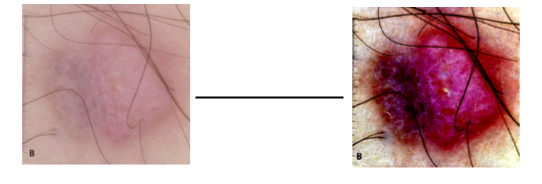
This image is good enough for clinical decision-making... to decide to biopy the lesion, but it's already late in the disease process, maybe even too late...
But to transform early disease detection and reduce mis- and missed diagnoses, we need to do better than just good enough.
The Solution
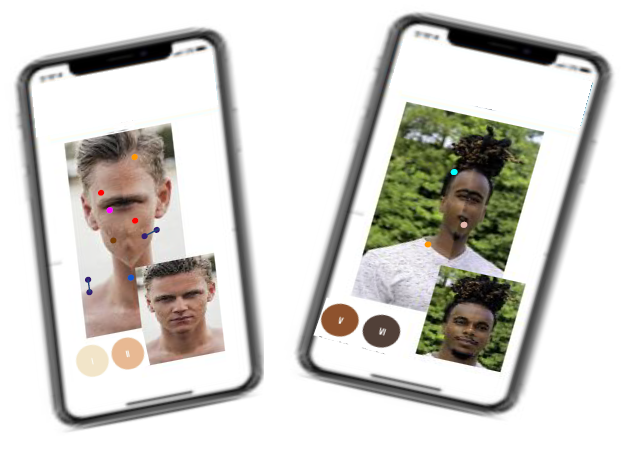
OriAI App(in development)
tools for clinicians - tools for learning - tools for life
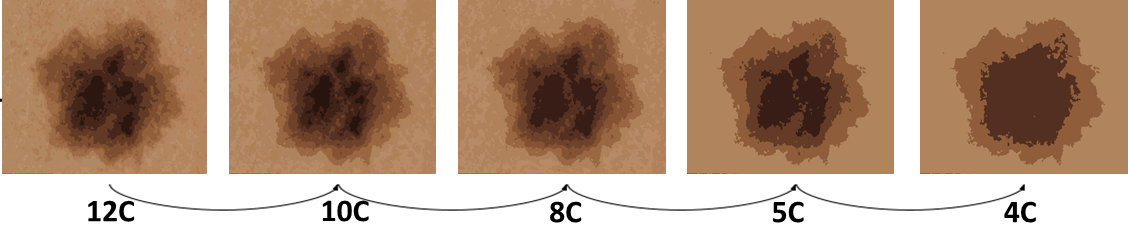
Conserving pigmentation for interior to edge to background analysis
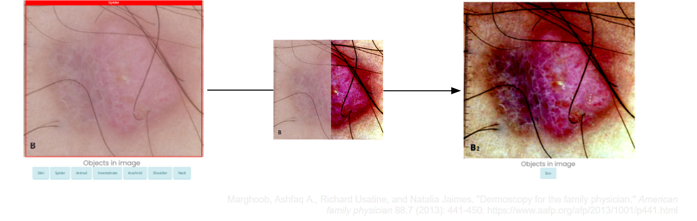
Enhancing Visualization
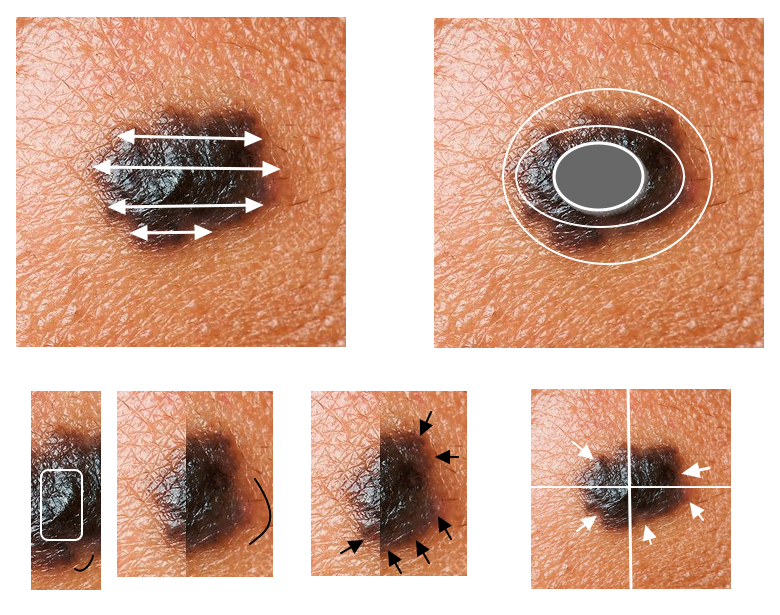
Refining ABCDE analysis with SnP
Engaging ALL Stakeholders
conflu3nce's comprehensive solution is designed to maximize early detection by engaging both clinical and consumer stakeholders in prevention and early-detection. Building health literacy skills and tools that support self-screening, self-reporting, and which address social determinants affecting trust and communication issues, can help bridge the gaps in professional dermatological diversity-aware knowledge and training.
Any solution must be complemented by increased awareness in risk reduction and early detection to improve health outcomes. Community-wide educational programs to improving health literacy in general and skin health in particular can serve to address long-standing trust and communication issues in effecting generational changeto advance knowledge, skills and process for ALL.

 This image is good enough for clinical decision-making... to decide to biopy the lesion, but it's already late in the disease process, maybe even too late...